It’s easy to forget, but your skin is an organ. Just like the rest of your body, it responds to the hormonal shifts that occur throughout the month and at junctures in your life—including perimenopause, menopause, and the phase that comes after. And yes, hormonal skin changes can certainly explain why your tried-and-true routine suddenly doesn’t seem to work like it used to.
These fluctuations can influence everything from hydration levels and oil production to firmness, elasticity, and sensitivity. Understanding what’s happening beneath the surface provides a roadmap for building a supportive, clean, science-forward skincare routine that keeps your skin glowing and gorgeous.
Related: Collagen Loss and Menopause: Why it Happens and Best Skincare Practices
How Are Hormones and Skin Connected?
Hormones play a vital role in how your skin looks, feels, and functions. “Skin is a hormonally responsive organ,” explains Dr. Michael J. Hall, MD, MSc, a board-certified physician and founder of Hall Longevity Clinic in Miami Beach. Changes across the menstrual cycle, through a pregnancy, and as you go through perimenopause and menopause are absolutely real.
Long story short: Skin cells contain receptors for hormones, including estrogen and progesterone, allowing them to respond as hormone levels rise and fall. Estrogen, in particular, is involved in processes that help maintain collagen, elasticity, hydration, and skin barrier function, while androgens can influence sebum production. Dr. Hall says that as the balance of these hormones shifts throughout life, the way your skin functions—and ultimately looks and feels—can shift along with it.
Related: What Causes Sagging Skin And How to Treat It
When Do Hormones Cause Skin Changes?
Women experience five hormonal transition points in their life: menstrual cycles, pregnancy and postpartum, perimenopause, and menopause. Dr. Hall adds, “Conditions such as PCOS or thyroid dysfunction can also show up through changes in acne, vulva irritation, hyper pigmentation, global skin dryness, hair growth or hair loss.
-
Throughout the Menstrual Cycle: As estrogen and progesterone rise and fall throughout the menstrual cycle, you may notice corresponding shifts in oil production, hydration, sensitivity, and breakouts.
-
Pregnancy: Dramatic changes in estrogen, progesterone, and other hormones during pregnancy can show up as increased pigmentation, acne, changes in oil production, and that often-talked-about “pregnancy glow.” Skin may also become more sensitive or reactive.
-
Postpartum: Following delivery, estrogen and progesterone levels drop rapidly, which can temporarily contribute to dryness, changes in texture, breakouts, and increased sensitivity.
-
Perimenopause: During the years leading up to menopause—which can begin as early as your mid 30s and last through your early 50s—estrogen levels become more variable and ultimately begin to decline. Mature skin may become drier, thinner, more sensitive, or less firm, while fluctuating hormones can also trigger breakouts (even if acne hasn’t been an issue for years.)
-
Menopause: Estrogen levels remain lower after menopause, so changes in collagen, hydration, skin thickness, and elasticity can become more pronounced. The result may be skin that feels persistently drier and more delicate and shows visible changes in firmness and texture.
Signs of Hormonal Skin Changes in Perimenopause and Menopause
While hormonal shifts affect skin throughout your life, the changes that occur during perimenopause and menopause can feel particularly noticeable—and sometimes seemingly come out of nowhere.
As estrogen fluctuates and eventually declines, you may start to notice:
-
Increased Dryness: Declining estrogen can affect the skin’s ability to retain moisture, leaving it feeling drier, tighter, or rougher than it once did.
-
Loss of Firmness and Elasticity: Estrogen plays a role in collagen production, so lower levels can contribute to a gradual loss of firmness and elasticity and more visible fine lines.
-
Thinner, More Delicate Skin: Skin naturally becomes thinner with age, and hormonal changes can contribute to this process, making it feel more fragile or delicate.
-
Increased Sensitivity: Changes to the skin barrier can leave once-resilient skin more prone to irritation, redness, or sensitivity.
-
Changes in Texture: A combination of reduced hydration, collagen, and natural skin renewal can make texture feel rougher or less smooth.
-
Unexpected Breakouts: Perimenopause can bring hormonal fluctuations that contribute to acne, particularly along the chin and jawline—even if breakouts haven’t been a concern in years.
The Best Skincare for Perimenopause and Menopause
As your skin changes during perimenopause and menopause, your skincare should evolve with it. This is a time to prioritize hydration, barrier support, and targeted ingredients that address visible changes in firmness, elasticity, texture, and radiance. At the same time, you don’t want to overwhelm skin that may be more sensitive than it once was.
It’s also worth paying closer attention to how your skincare is formulated. All KNESKO’s clean-clinical skincare products, treatments, and collagen face masks are expertly formulated by esthetician and founder Lejla Cas. Each item is thoughtfully formulated without ingredients such as phthalates, parabens, sulfates, formaldehyde, PEGs, silicones, and petroleum.
Just as importantly, formulas incorporate clinically proven active ingredients (including peptides, vitamin C, niacinamide, and CoQ10) alongside carefully selected botanicals to support healthy-looking skin.
Read More: KNESKO’s Commitment to Clean Beauty
Build a Supportive Daily Routine
As estrogen declines, hormonal skin changes mean you’re apt to experience dryness, sensitivity, and loss of firmness and elasticity. Your daily routine should replenish moisture, support your skin barrier, and help skin feel more bouncy.
“My advice is consistency over complexity,” Dr. Hall says. “Use a gentle cleanser, support the skin barrier with a good moisturizer, and wear broad-spectrum sunscreen every day.”
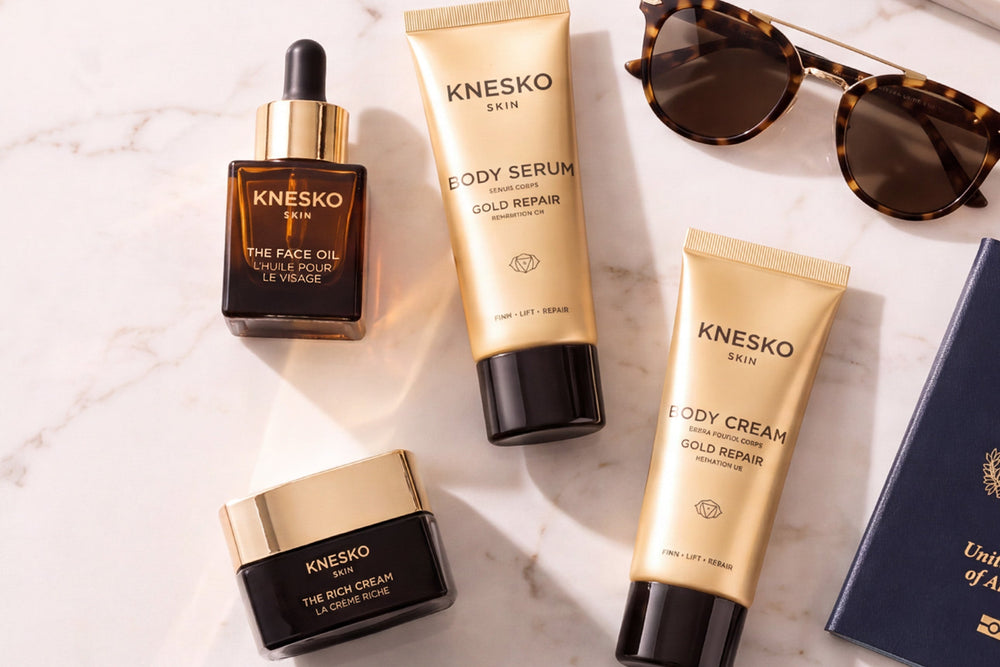
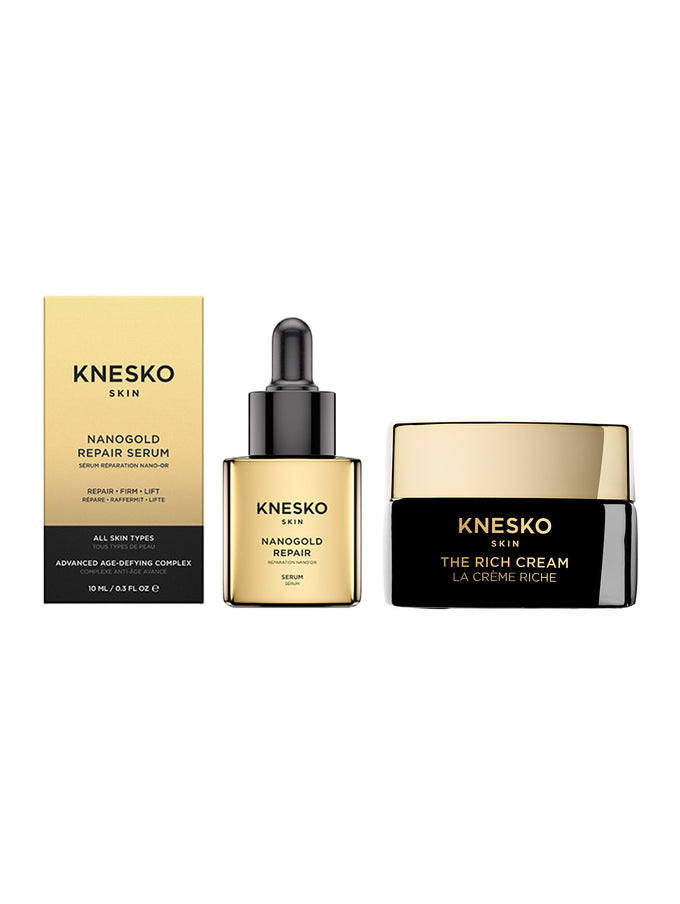
KNESKO’s Gold Repair Skincare makes these priorities part of your everyday routine. Use the supremely gentle Gold Repair Cleanser morning and night, and dot on The Eye Cream to target this delicate skin that shows early signs of aging.
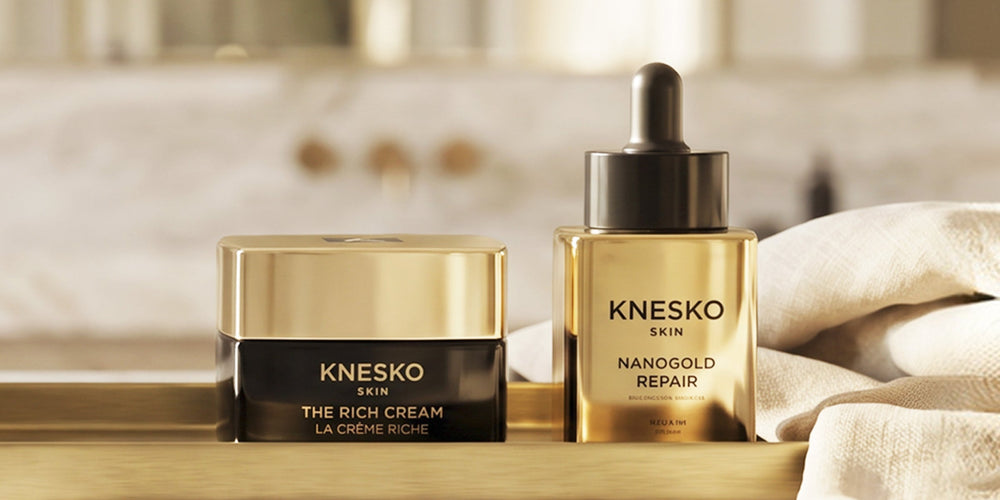
For your facial moisturizer, reach for either The Rich Cream or The Light Cream. The Rich Cream has a unique moisture complex that supports deeper hydration while The Light Cream has niacinamide and blurring spheres to visibly hydrate and soften. And of course, wear The Sunscreen (SPF 50+) every single day. Each clean-clinical formula pairs pro-collagen actives and peptides with ingredients chosen to support hydrated, firmer, more resilient-looking skin.
Targeted, Clean-Clinical Treatments
Along with keeping a daily routine, incorporate targeted treatments that address issues you care about most. Some of our best skincare products for menopausal skin:
-
Gold Repair Exfoliator: For dullness and uneven texture, this dual-action exfoliator pairs gentle polishing crystals with fruit-derived AHAs to reveal smoother, brighter, more refined-looking skin.
-
Brighten + Hydrate Ritual: Address two common concerns at once with Diamond Radiance Serum for uneven tone and discoloration and Amethyst Hydrate Serum to replenish moisture and support the skin barrier.
-
Diamond Radiance Serum: Target the look of dark spots and uneven tone with a brightening blend of tranexamic acid, stabilized vitamin C, niacinamide, arbutin, and bakuchiol.
-
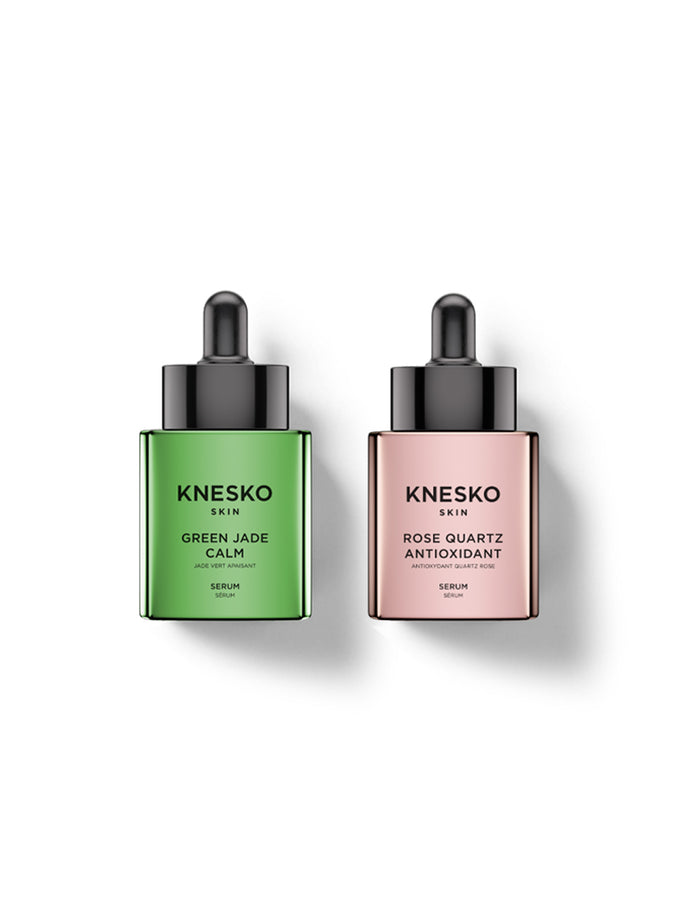
Calm + Protect Duo: For skin that has become more sensitive or reactive, this two-serum ritual helps calm visible redness, replenish moisture, support the skin barrier, and defend against environmental stressors.
-
Firm + Renew Ritual: Address loss of firmness alongside changing texture with Gold Repair Serum for visible lift and smoothness and Pearl Resurfacing Serum to refine texture, pores, and uneven tone.
-
Green Jade Calm Soothing Facial Set: Soothe dry, stressed, or sensitive skin with a complete ritual featuring colloidal oatmeal, centella asiatica, squalane, and other ingredients that help replenish moisture and support the skin barrier.
“Introduce active ingredients gradually, because hormonally changing skin may also be more reactive,” Dr. Hall advises.

Mind-Skin Connection with Masking
Creating intentional moments to slow down and manage stress can be an important part of supporting mature skin and overall well-being, too.
“Skin reflects the health of the entire system,” Dr. Hall says. “As I state in my book, Infinite Youth, lifestyle is so important and so often underestimated. Sleep, stress regulation, regular exercise, stable blood sugar, adequate protein and micronutrients, hydration, and avoiding smoking and alcohol, all help create the biological conditions for healthier skin.”
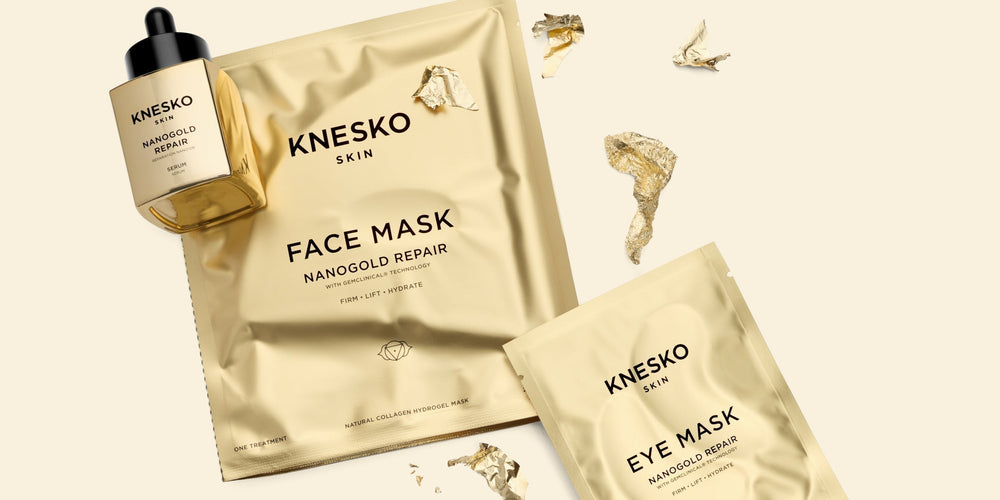
One of our favorite ways to decompress is with a KNESKO collagen face mask, which pairs science-forward skincare with an intention. Each KNESKO collagen face mask includes a guided meditation by founder Lejla Cas.
Consider this skincare routine for mature skin a weekly gift to yourself—a quiet moment to slow down, meditate, and find grounding. From Amethyst Hydrate to Gold Repair and Pearl Renew, each collection pairs targeted skincare benefits with an intentional moment of self-care.